Our Work
Sri Ranganatha Swamy Temple, Rangasthala – Namma Smaraka CSR Project (Ongoing)
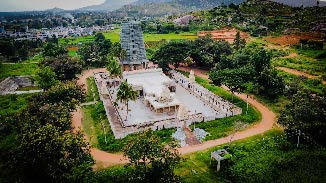
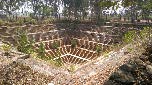
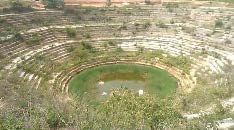
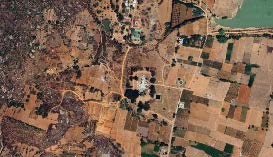
Sri Ranganatha Swamy Temple at Rangasthala, Chikkaballapur, is an ancient Vaishnava shrine, often dated to the late Hoysala–early Vijayanagara period and linked in local lore to the four “Rangas” that grant moksha to devotees of Lord Vishnu. At its core is a rare Eka‑shila (single‑stone) idol of Sri Ranganatha, carved from one Saligrama stone and enshrined in a garbhagriha whose basket‑like form recalls the legend of Lord Rama gifting the deity in a bamboo basket to Vibhishana, giving the site enduring spiritual significance as “Moksha Ranganatha.” Archaeologically, the complex is distinguished by its twin kalyanis – Shanka Tirtha and Chakra Tirtha – a square, deeply terraced stepped tank and a circular stepped well, whose contrasting geometries embody traditional water‑management and ritual practice, set within a clearly defined sacred precinct of mandapas, pradakshina path, subsidiary shrines and a documented grove of bilva, banyan, tulsi, parijata, coconut and other sacred species
As part of the Namma Smaraka – Adopt a Monument scheme of the Government of Karnataka, Infra.Market and Discovery Village have adopted Sri Ranganatha Swamy Temple, Rangasthala, with Culkey Foundation as the implementation partner under the custodial and regulatory oversight of the Department of Archaeology, Museums and Heritage (DAMH). The project commenced in September 2025 and is structured as a five‑year intervention, including three years of maintenance, with the entire project cost (initial estimate over ₹30 crore) covered by the CSR partners through separate work packages for each funder. Phase 1 focuses deliberately on hard infrastructure and core site preparation across approximately 20 acres: earthworks and landscaping, safeguarding and fencing the precinct, understanding and protecting the two stepwells and their groundwater sources from further deterioration, providing a limited set of basic visitor amenities, and creating a Nakshatra and Navagraha vana with Tulsi plantations as part of the outer sacred landscape. Only once this foundational work is complete will Phase 2 move deeper into conservation and restoration of built fabric and associated elements, in line with DAMH guidelines and archaeological best practice.
From a CSR standpoint, this project is eligible under Schedule VII, item (v) of the Companies Act, 2013 (protection of national heritage, art and culture, including restoration of buildings and sites of historical importance), with Culkey Foundation – a Section 8 entity with CSR‑1 registration and 80G – acting as the implementing partner for Infra.Market and Discovery Village. DAMH remains the custodian and regulator of the monument, while CSR partners fund the defined scope and Culkey executes and monitors on the ground, having deployed a full‑time resource at site, supported by weekly mandatory site visits from the Culkey team. Culkey has appointed Urban Frame and a team of conservation experts to advise on planning and implementation, and works within the oversight of a District Monument Committee comprising departmental representatives, public representatives and local priests constituted by DAMH prior to project award. All CSR funds are strictly applied only to works outside the live Hindu temple interior—such as landscape, access, stepwells, amenities and precinct‑level conservation—and not a single rupee is used for religious rituals, ensuring alignment with CSR norms and public‑benefit criteria. Culkey will issue project‑wise utilisation certificates to each CSR partner, with phase‑wise milestones and progress reporting linked to the completion of Phase 1 hard infrastructure and the subsequent roll‑out of Phase 2 conservation and restoration activities.
Adopters
Consultants
Civil Contractor


Consultants

Civil Contractor

YRR Constructions
Licensed Class I Contractors, Government of Karnataka
Licence Reg No: CBS/C1/Civil/14687/2020
Student Internship Reports
TEJASWINI Y
RV College of Architecture
Second year / M.Arch / 4th Semester
VAISHNAVI S
RV College of Architecture
Second year / M.Arch / 4th Semester
VISHWESH B KUMBAR
RV College of Architecture
Second year / M.Arch / 4th Semester
Culkey Foundation as Project Management Unit for Namma Smaraka, Government of Karnataka.
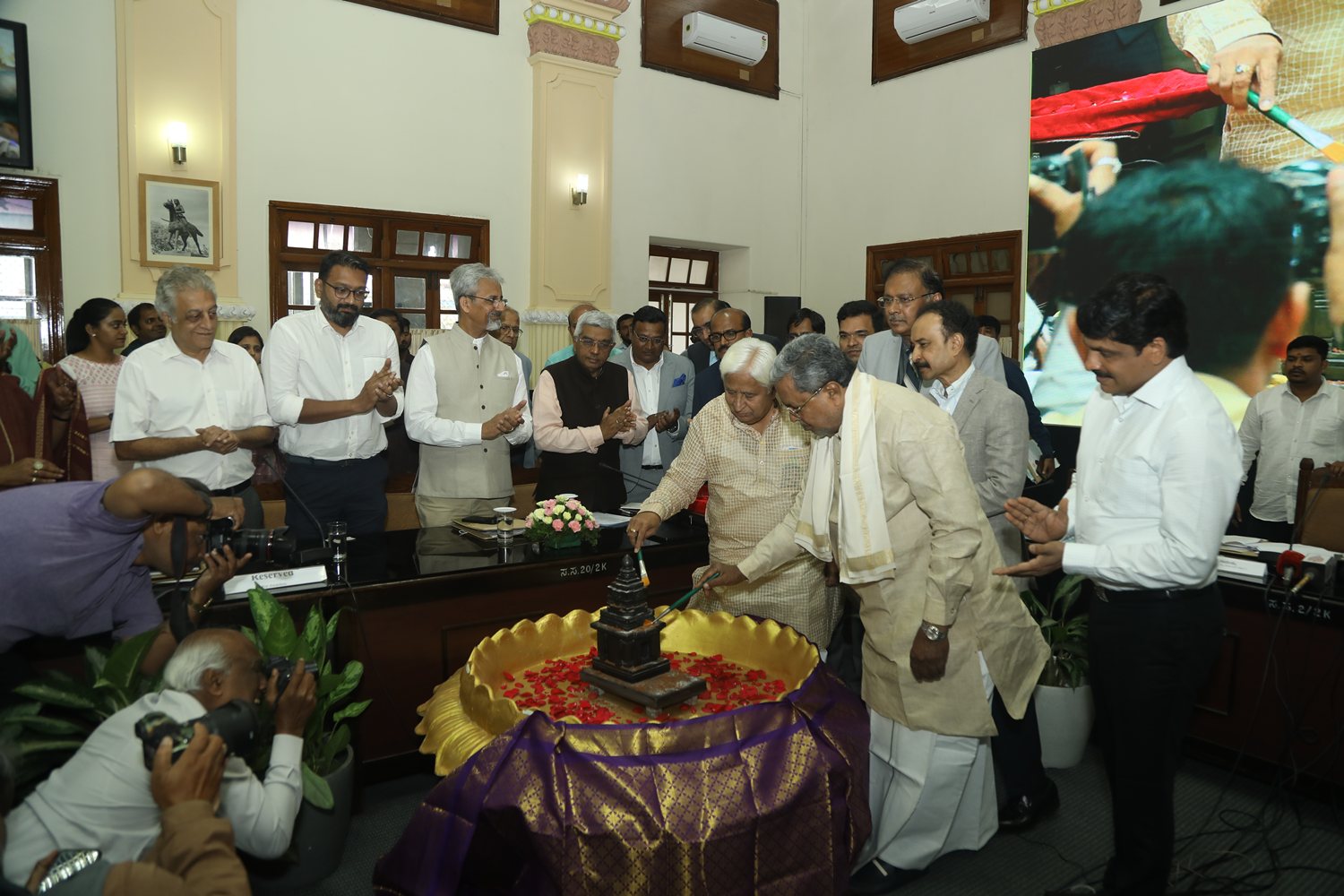
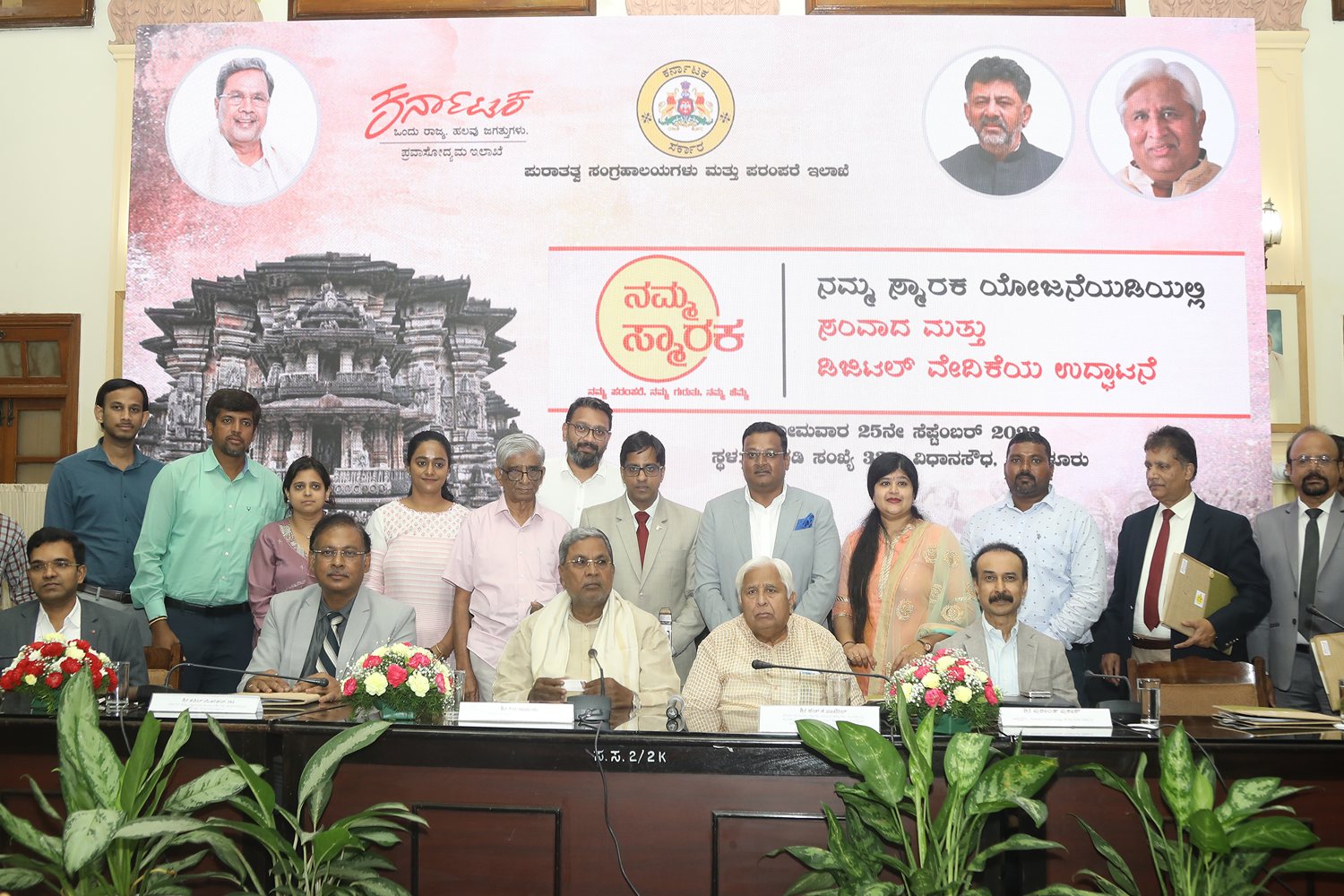
On 25 September 2023, the Government of Karnataka launched Namma Smaraka, a digital “Adopt a Monument” portal to conserve and improve heritage sites across the state. The programme is led by the Department of Archaeology, Museums and Heritage (DAMH) with the Department of Tourism and aims to protect monuments while adding visitor facilities such as safe access, sanitation and information services. The official portal for the programme is www.nammasmaraka.in
At this launch, inaugurated by Hon’ble Chief Minister Shri Siddaramaiah and Hon’ble Minister for Law, Parliamentary Affairs and Tourism Shri H K Patil, DAMH introduced Namma Smaraka as a structured framework to engage Smaraka Mitras (adopters) in caring for state‑protected monuments. As part of the same event, Culkey Foundation signed an MoU with DAMH to provide exclusive Project Management Unit (PMU) support for Namma Smaraka for a period of three years, in a non‑commercial and non‑financial engagement, while DAMH retains full custodial and regulatory responsibility over the monuments.
Culkey Foundation is a Section 8 not‑for‑profit company under the Companies Act, 2013, registered in Form CSR‑1 on the MCA portal and holding valid 80G registration, making it eligible to act as an implementing agency for CSR projects. Under this framework, Culkey assists DAMH in the adoption process and implements CSR‑eligible projects for partner companies under Schedule VII, primarily under item (v) – protection of national heritage, art and culture including restoration of buildings and sites of historical importance and works of art – and related items covering livelihoods, skills, environment and local development. The vision of Culkey is “Experiences that keep places alive and people thriving”, and its work under Namma Smaraka applies this experience‑economy lens to heritage, livelihoods, ecology and local economies.
Within Namma Smaraka, Culkey’s PMU role includes identifying gaps at sites, supporting DAMH and Smaraka Mitras through the online adoption workflow, coordinating approvals, and assisting implementing agencies during planning and execution, while project funding flows from companies as CSR expenditure in line with Schedule VII and CSR Rules. Since taking on this role, Culkey Foundation has assisted DAMH and Smaraka Mitras in the adoption of more than 20 heritage sites under the Namma Smaraka framework, adding dedicated execution capacity to a system that ultimately covers roughly 800 state‑protected monuments across Karnataka. For each CSR‑supported project under Namma Smaraka, Culkey maintains separate project accounts and issues project‑wise utilisation certificates to funders, supporting their statutory reporting and assurance requirements.
OneTAC – Experiences that keeps places alive and people thriving
India’s tourism, arts and culture (TAC) run mostly on informal work, about 8 in 10 TAC workers lack formal contracts, social security or easy access to markets. You may book flights and hotels on sleek apps, but your real memories come from people who are invisible in any registry: the local guide, homestay family, craftsperson or performer. OneTAC is the open grid for India’s tourism, arts and culture experiences, created to turn these local stories into dignified, better‑paid livelihoods instead of leaving them outside the formal ecosystem.
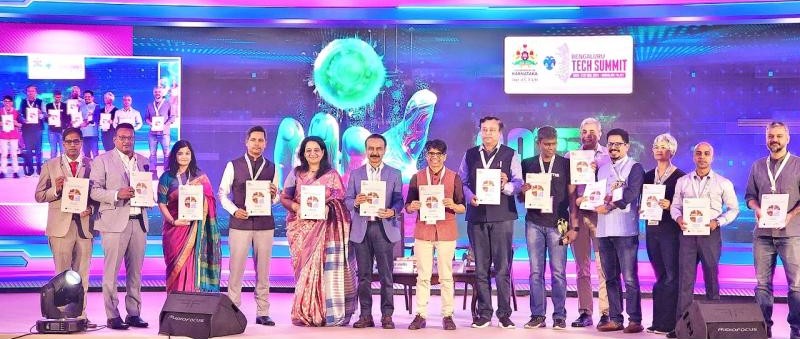
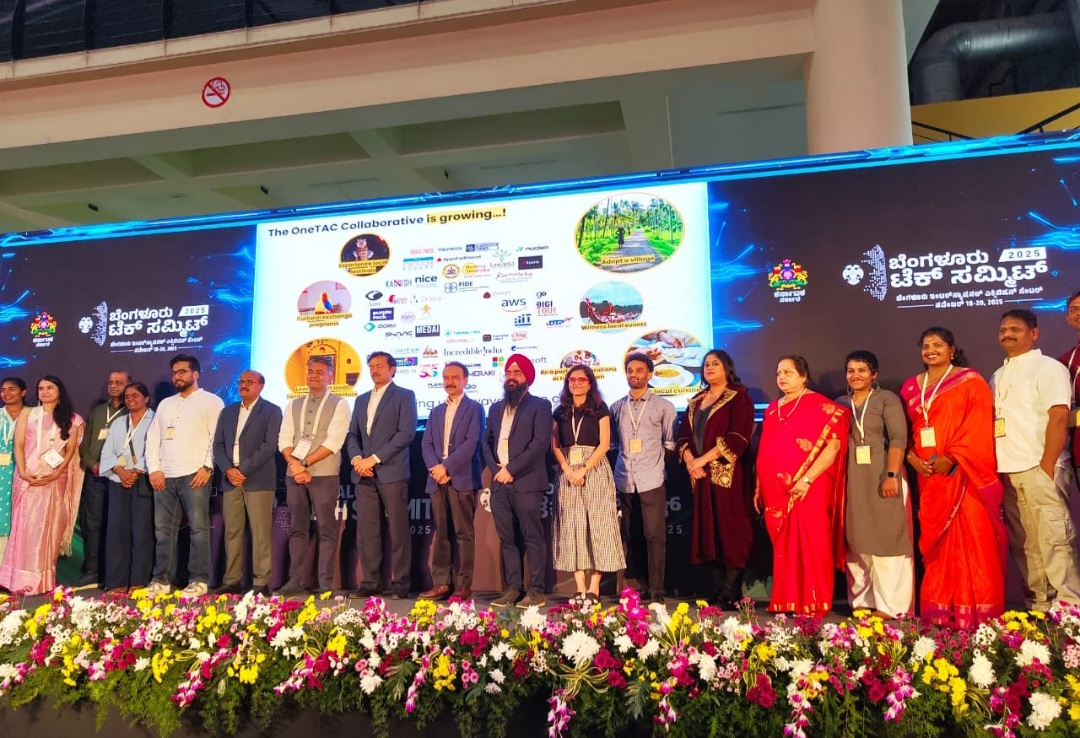
OneTAC is a initiative of Culkey Foundation, a Section 8 company with CSR‑1 and 80G registration, designed as a public–private–community led initiative grounded in Digital Public Infrastructure principles. Co‑authored in 2024 with DPI leaders and foundations, OneTAC builds open rails that any actor can use open standards, open APIs and shared registries, so government platforms, startups and local organisations can plug into the same open grid for tourism, arts and culture, instead of creating new silos. In 2025, this idea came alive through the Udupi Experience Circuit – a community‑led pilot under Incredible India, launched at Bengaluru Tech Summit 2025, where 20 local creators and 15+ curated trails showed how OneTAC can turn a coastal town into a living “experience lab” with real human impact and national‑level recognition.
At the heart of the mission is the OneTAC Hub a place‑led, cluster‑based unit where informal actors are seen, supported and connected. At a OneTAC Hub, we help actors with simple steps like ID and bank linkage, digital payments, and listing on curated experience circuits, while mission partners provide access to credit, markets, insurance, skilling and entrepreneurship support. Hubs document local places, cultures, stories and people, building an “encyclopaedia” of each geography and track outcomes such as the number of informal actors who become formal, people skilled, experiences launched and TAC sites mapped, all under strong consent, safeguarding and “do‑no‑harm” norms.
If you are a CSR leader, philanthropist or ecosystem leader, partner with the OneTAC mission by anchoring a OneTAC Hub or funding place‑led pilots and skilling programmes. If you are an organisation working in TAC, local economy, skilling or access to credit, equity or markets, become a OneTAC partner and help run Hubs on the ground. If you are an informal TAC actor, connect with a OneTAC Hub (physically) or OneTAC Accelerator (digitally) to become discoverable and transactable; formal actors can use the same open rails to scale their offers in a way that keeps value local. OneTAC is the open grid for India’s tourism, arts and culture experiences and this is the moment to help build it together.
ONE TAC PARTNERS